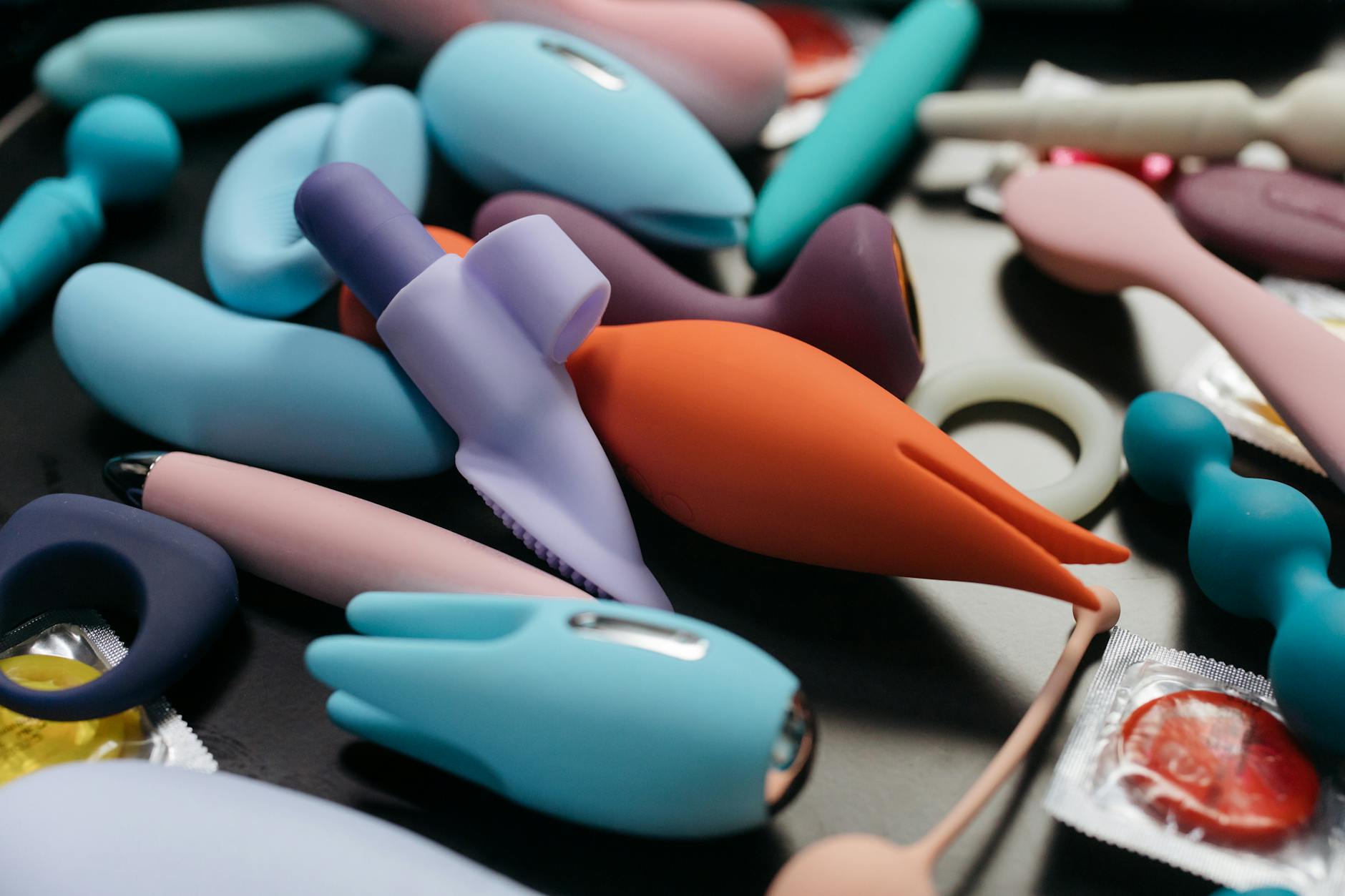
Let's talk about checking out
Disconnection from your body is not failure. It's a signal. It happens after stress, after loss, after too many seasons of putting everyone else first. Sometimes it follows a betrayal or a medical trauma. Sometimes it just creeps in so gradually you don't notice until you realize you haven't felt actual sensation in months.
Then comes the guilt. The shame spiral. "Why can't I just want this?" The answer is simple: your nervous system made a rational choice to go offline. Reconnecting doesn't happen through willpower. It happens through gentle, grounded practice.
Why your body disconnected in the first place
When we're in survival mode—stressed, anxious, hurt, or overwhelmed—the nervous system prioritizes threat detection over pleasure. Your brain literally dampens sensation to conserve resources. That numbness is your body protecting you. It's not laziness. It's not frigidity. It's neurobiology.
Most people try to force reconnection by going too big too fast. They set expectations. They plan a "night." They load it with meaning. Then they feel worse when nothing happens. This approach fails because it keeps the nervous system in high-alert mode.
The three-stage path back
Stage one: permission without expectation. You need explicit, repeated permission to feel nothing and that's okay. Not "I should be turned on." Permission to literally not care about the outcome. Lemon vibrators excel here because they're designed for precision. You're not trying to perform. You're observing.
Stage two: sensation before pleasure. This is the overlooked step. Most people skip from numbness straight to orgasm attempts. In between is an entire spectrum: tingling, warmth, rhythm, texture, vibration patterns. Spend time here. Notice temperature. Notice pulse. Notice where sensation lives and where it's still sleeping.
Stage three: pleasure as a choice, not a destination. Once sensation returns—and it will—pleasure follows naturally. But only if you're not treating it as a test you can pass or fail.
How to actually use a lemon clitoral vibrator for reconnection
Start with observation, not stimulation. Hold a lemon vibrator (like the lem vibrator from The Lemon Clit Vibrator) in your hand for five minutes before turning it on. Feel the weight. The silicone temperature against your skin. Let your body register: this is not a threat. This is an object of exploration.
Then turn it on at the lowest setting. Not on yourself yet. On your forearm, your inner wrist, your thigh. Feel the vibration pattern. Your nervous system needs to catalog what this feels like before it reaches your most sensitive tissue. This takes the pressure off and genuinely helps.
Move to your vulva only after your body says yes. Not your brain saying yes. Your body. You'll know the difference. When you do, start by moving the vibrator around the external area first. Mons pubis, outer labia, the side of the clitoris. The point is not stimulation. The point is reacquaintance.
Set a 15-minute boundary. Not because 15 minutes is magic, but because time pressure kills reconnection. Knowing you have a defined window helps your nervous system relax. "I'm doing this for 15 minutes, then I'm done, and that's complete," is information that nervous systems crave.
The role of novelty and rhythm
One reason lemon sexual toys work so well for reconnection is their suction-based technology. Unlike traditional vibration, which can feel intense or overstimulating to someone who's been numb, air-pulse stimulation feels different. It's gentler. It recruits sensation without demanding response.
If you find yourself in stage two (sensation returning), experiment with pattern changes. Most lemon adult toys have multiple settings. Spend a session on pattern one. Another session on pattern two. Your body isn't broken if one pattern works better than another. You're gathering information about what your nervous system finds soothing versus engaging.
What to expect during reconnection
Some people feel tingling in week one. Others feel nothing for three weeks, then suddenly sensation floods back. Both are normal. Some days you'll feel more. Some days less. The nervous system doesn't follow a linear path.
You might cry. You might feel rage. These aren't failures. These are emotions that were stored in the disconnection itself. As sensation returns, emotion travels with it. That's actually healthy movement.
Connecting this back to partnership (if that's relevant for you)
If you're in a relationship and reconnecting to your body, your partner doesn't need to be part of the early stages. This is yours first. Once sensation and pleasure start returning, then you can choose whether to invite your partner in. Many people find that solo reconnection actually makes partnered intimacy easier because there's no pressure, no performance, no audience anxiety.
If your partner doesn't understand why you're doing this alone, that's a separate conversation. How to Introduce Lemon Vibrators to Your Partner Without Awkwardness walks through that specifically.
The patience piece (which actually matters)
Reconnection is not a sprint. It's a reclamation. Some people find their way back in weeks. Others take months. Both timelines are fine. What matters is that you're meeting your body where it actually is, not where you think it should be.
I've watched people rush this process and then feel worse when forced sensation doesn't feel like pleasure. I've also watched people move slowly, staying curious instead of goal-focused, and find their way back to genuine desire and sensation that feels earned rather than performed.
Your body knows how to feel. It's just been offline. Lemon vibrators are a practical tool. The real work is the permission you give yourself to go slowly, to notice, and to trust that pleasure isn't broken. It's just waiting for the right conditions to wake up again.
Frequently asked questions
How long does it actually take to reconnect to your body?
There's no standard timeline. Some people notice shifts in 2-3 weeks of consistent practice. Others take 2-3 months. What matters is regularity over speed. Using a lemon vibrator twice a week with genuine curiosity beats using one daily while stressed about results. Your nervous system responds to consistency and lack of pressure, not intensity.
What if I still feel nothing after a month?
That's information, not failure. It means either more time is needed, or something else is happening—depression, medication side effects, unprocessed trauma, or ongoing stress that needs addressing. If sensation hasn't shifted at all after six weeks, it's worth talking to a therapist or doctor. Numbness that persists usually needs support beyond a vibrator.
Can I reconnect with my body while still in a stressful relationship or job?
Yes, but it's slower and harder. Your nervous system is still in protection mode. The reconnection work is absolutely still worth doing because it builds capacity to feel, but you're working against an active stressor. Think of it like trying to sleep in a loud room. Possible, but not ideal. If you can reduce the stressor even slightly, the reconnection accelerates.
Is it normal to feel emotional or cry during reconnection?
Completely normal. Pleasure and emotion are stored in the same parts of the body. When sensation wakes up, so do the feelings that were frozen with the numbness. Crying during or after using a lemon clitoral vibrator isn't a sign something's wrong. It's often a sign something's healing.
Should I tell my partner I'm doing this?
That depends on your relationship. If you're in a secure partnership, honesty usually helps. Something like, "I've been feeling disconnected from my body, and I want to reconnect through solo practice first." doesn't require exhaustive detail. If your relationship is unstable or controlling, you get to protect your privacy. How to Use Lemon Vibrators When Your Partner Won't Talk About Sex addresses communication breakdowns directly.
Can I use a lemon vibrator if I have trauma around touch?
Yes, with extra gentleness and control. The beauty of a toy is that you control every aspect. You control the intensity, the duration, the pattern, when to stop. Many trauma survivors find that solo pleasure practice with a toy actually helps rebuild safety around sensation because it's fully in your hands. Starting extremely slowly and keeping a boundary of "I stop whenever I want" is key.
What if reconnection feels good but then plateaus?
That's a sign you might be ready to move to stage three. Sensation has returned. Now pleasure is developing. The plateauing often means your nervous system is asking for something slightly different—maybe more variety in patterns, maybe trying different times of day, maybe exploring Lemon Vibrators for Better Foreplay With a Long-Term Partner if you're ready to invite partnership back in.
Reconnection isn't a destination. It's a doorway back to your own body. What you do on the other side is up to you.