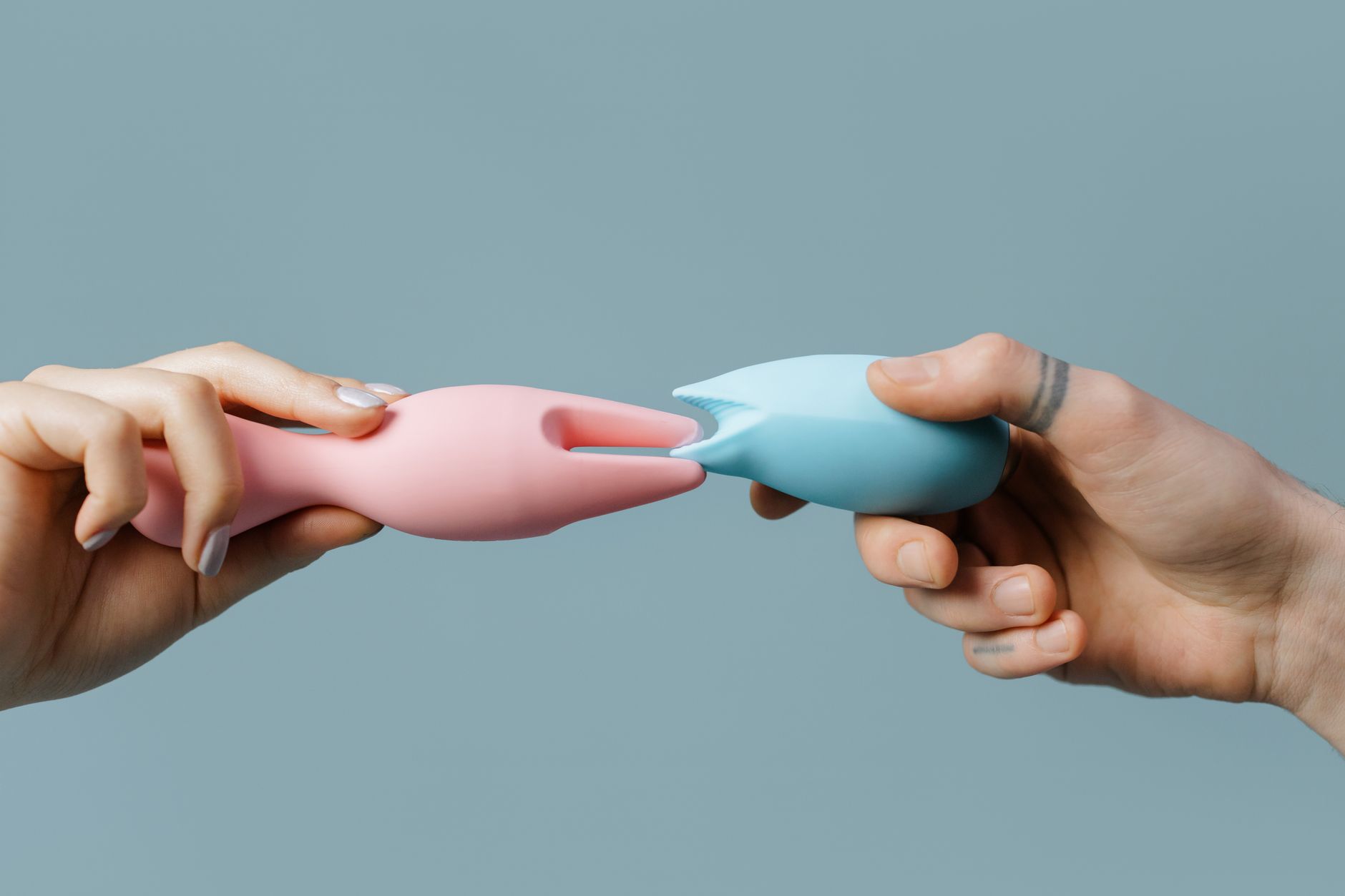
Here's what nobody tells you about long-term couples and foreplay
After five years, ten years, twenty years, foreplay often becomes the thing you skip. It's not that you don't want it. It's that you've both gotten efficient. You know what works. You know how long it takes. And honestly, efficiency starts to feel like the opposite of desire.
Then one day you realize foreplay used to take an hour, and now it takes five minutes. Or doesn't happen at all.
Why foreplay dies in long-term relationships
It's not about love or attraction. It's about predictability. When you know someone's rhythm, their breath, what comes next, the anticipation evaporates. Your nervous system stops registering novelty. And without novelty, your brain doesn't release the cocktail of dopamine and norepinephrine that makes early-relationship sex feel electric.
Here's the thing though: novelty doesn't require a new partner. It requires breaking the pattern.
Lemon clitoral vibrators are one of the cleanest ways to do that. They're not replacing foreplay. They're extending it. They're giving you permission to slow down because now there's something happening that wasn't there before.
Why lemon sexual toys shift the foreplay equation
When you introduce a lemon vibrator, the dynamic changes instantly. Suddenly your partner isn't performing the same touch they've performed ten thousand times. They're watching your response to something new. They're curious again about what will happen.
That curiosity is foreplay.
Clitoral vibrators like the Lemon also change the pacing problem. If one partner typically takes longer to become aroused, or if you've both adapted to rushing, the vibrator creates a built-in permission structure to spend thirty or forty minutes on arousal instead of five.
You're not rushing toward sex. You're exploring together. The lemon vibrator becomes the reason to stay in that space.
How to actually introduce it (without weird negotiations)
Honestly, the script matters less than the energy. Avoid the "we should talk about trying something" conversation at the dinner table. Instead, bring it up in the moment.
Something like: "I've been thinking about how we could make things feel less rushed. I ordered this lemon clitoral vibrator. Want to try it together this weekend?"
That's it. No framing it as a problem. No "we've lost the spark" energy. Just a simple, "I want us to have more time." Most partners will say yes because it's not a criticism of them. It's a yes to pleasure.
If your partner seems hesitant, the fear is usually one of three things: they think they're being replaced, they're worried about performance pressure, or they don't know how to participate.
Address the specific one. "I want you to guide it. I want to see how you explore me differently." That shifts it from something your partner has to do in addition to sex into something you're doing together.
Building the foreplay ritual
Let's say you've introduced the lemon vibrator. Now what? Here's a structure that works:
Start with no clothes but not in bed yet. Kitchen. Living room. Couch. Somewhere that doesn't have the weight of "this is where we have sex."
Your partner holds the lemon vibrator. You guide their hand to where it feels good. Let them feel how your body responds. Most partners have never had this direct feedback. They'll become obsessed with finding the exact spot that makes you react.
Then, flip it. You hold it. Guide them to touch you while the vibration is happening. That's a different sensation than vibration alone. The combination of their touch and the vibrator is what will actually matter to your nervous system.
This isn't about reaching an orgasm. It's about staying in arousal. Spend twenty minutes here. Talk while it's happening. "That feels incredible." "Try the second setting." "Slow down." Your partner is getting real-time information about your body, which they probably haven't had in years.
The rhythm that works
With lemon clitoral vibrators, intensity doesn't have to climb linearly. Start on setting one or two. Most people make the mistake of cranking it to the highest intensity immediately. That's fine for solo play, but in foreplay, you want undulation.
Pattern: low intensity for three to five minutes. Pause. Switch to medium. Pause. Back to low. The pause is where anticipation rebuilds.
Your partner can also apply and remove the vibrator. That on-off rhythm is more engaging than continuous stimulation. The brain is literally waiting for the sensation to return.
If this is foreplay that leads to penetrative sex, keep the lemon vibrator at a lower intensity throughout. Save the highest settings for after, or skip them entirely. The point here isn't about reaching orgasm through the vibrator. It's about reaching that state of arousal where your whole body is engaged.
What happens when you do this regularly
After two or three sessions of this kind of foreplay, something shifts. Your nervous system starts to anticipate it. You'll find yourself thinking about the pattern during the day. Your partner will start experimenting with rhythm without you directing them.
And here's the weird part: foreplay will actually extend before you even introduce the lemon vibrator again. Because your body and your partner's body have recalibrated around longer arousal. You've broken the efficiency habit.
One client told me: "We started using the lemon clitoral vibrator once a week, and now we spend thirty minutes on foreplay even when we're not using it. We forgot we could do that."
That's actually what happens.
When to use lemon vibrators versus when to skip them
Not every session needs a vibrator. If you've rebuilt the foreplay habit, you'll actually want to mix it up. One session with the vibrator. One without. One where you use it at the beginning and then don't. One where you only use it if orgasm isn't happening naturally.
The consistency that matters is the time you're spending together in arousal. The lemon vibrator is just the tool that gave you permission to reclaim that time.
If your partner is resistant
Sometimes resistance isn't about the vibrator. It's about vulnerability. Watching your partner become aroused requires a kind of presence that long-term partners sometimes lose. Some people feel performance anxiety about "doing it right" with a new tool.
If that's happening, try this: you guide the vibrator for a few sessions. Your partner just receives. That removes the pressure of "performing with the new thing." Once they're comfortable with how it feels, they'll naturally want to explore with it.
Or start with solo sessions. Use the lemon vibrator by yourself when your partner is around. Not as a performance, just as a normal part of your routine. "I'm going to take twenty minutes for myself." That normalizes it. Then gradually introduce them into it.
The bigger picture
Lemon vibrators don't save relationships. But they do something almost as useful: they interrupt the autopilot. They create a space where you have to be present with your partner again. They require attention. They rebuild curiosity.
That's foreplay in its truest form. Not the specific touches. The rekindling of interest in someone you've already chosen.
If you're feeling like foreplay has become a casualty of long-term partnership, how to use lemon vibrators when lubrication changes with age covers some of the physical shifts that might also be at play. And if you're looking to rebuild intimacy more broadly, lemon vibrators for couples who want to build intimacy slowly has some gentler entry points.
But start with time. The lemon vibrator is just the permission slip.
FAQ
How long should foreplay actually take with a lemon clitoral vibrator?
There's no "should." But most couples find that introducing a lemon vibrator extends foreplay from five to ten minutes to twenty to thirty minutes. The point isn't duration for duration's sake. It's duration that allows arousal to actually build. If you're both aroused in ten minutes, ten minutes is fine. If arousal takes longer (which it often does after decades together), the vibrator gives you both permission to invest that time.
Can we use lemon vibrators during foreplay if we're trying for a baby?
Absolutely. Vibrators don't affect fertility. Some couples actually find that using a clitoral vibrator during foreplay helps with orgasm timing, which can matter for conception. The main thing is making sure any vibrator is completely clean before use.
My partner thinks introducing a vibrator means I'm not satisfied with them.
This is the most common concern. Here's the reframe: "I'm more satisfied with you when we slow down and spend real time together. I want us to have that time. The vibrator isn't instead of you. It's so we can be together longer without rushing."
Most people understand that frame immediately. The vibrator isn't competition. It's an invitation to slow down.
Should lemon vibrators be used during the actual penetrative part or just before?
Both work. Some couples use it only during foreplay, then put it aside. Others incorporate it during penetration, which can change the sensation for both partners. Try both and see what feels better. There's no rule here.
How do I guide my partner on where to use the vibrator if I've never said what feels good?
This is actually a gift. For the first time, you get to tell them exactly where it feels incredible. Most long-term couples have never had this conversation because the non-verbal cues have calcified. Foreplay is the moment to break that open. "A bit lower." "That spot." "Slower." You're not criticizing. You're educating your partner on your body all over again.
What if using lemon sexual toys makes foreplay feel less intimate?
That's usually because the vibrator is replacing presence, not extending it. If you're using it while texting or half-engaged, yeah, it will feel less intimate. But if you're using it as a reason to watch your partner, stay present, and communicate, it actually deepens intimacy. The lemon vibrator is a tool for presence if you use it that way.
The bottom line
Long-term partnership doesn't have to mean losing foreplay. It means being willing to interrupt the pattern. Lemon clitoral vibrators are one clean way to do that. But the real tool is the time you're choosing to spend together, and the willingness to be curious about each other again.
If you're ready to try, start small. One session. Low pressure. Watch what happens. Your partner might surprise you by how engaged they become. And you might surprise yourself by remembering why you chose them in the first place.