
Let's talk about introducing toys without the pressure
Here's the thing: most couples either avoid the conversation entirely or jump straight to using something together without discussing why. Neither approach builds intimacy. What actually works is a middle path. Slow. Intentional. Honest about what you each want and what scares you.
I've worked with hundreds of couples, and the ones who find real pleasure together aren't the ones who dive in fastest. They're the ones who treat introducing a lemon vibrator the way you'd approach any significant shift in your relationship. With communication first. Curiosity second. Performance nowhere in the equation.
The conversation you actually need to have
Don't start by saying "I want to use a vibrator during sex." Start much earlier, in a low-stakes moment. Maybe you're driving, or walking, or sitting on the couch. Somewhere you're not making eye contact but you're still present.
Try: "I've been thinking about our sex life. I want to feel more connected to you. I've heard good things about lemon vibrators, and I'm curious if you'd be open to exploring that together. No pressure. But I'd love to know what you think."
Then stop talking. Let your partner respond without you jumping in to convince them or defend yourself. Listen for what's underneath their initial reaction. Are they curious? Worried they won't be enough? Unsure if they'll like it? Each concern points to what you actually need to address together.
If they say no immediately, resist the urge to persuade. Instead, ask: "What concerns you about it?" Most resistance isn't about the toy itself. It's about feeling replaced, or inadequate, or like something's wrong with the relationship. Address that belief, not the vibrator.
Why the pace matters more than you think
Introducing a lemon sexual toy isn't like buying a new appliance. Your nervous system is involved. Your sense of safety in the relationship is involved. Moving slowly activates a completely different part of your brain than moving fast.
When you rush, both partners go into performance mode. You're thinking about whether you're doing it right, whether your partner is enjoying it, whether you look weird. That's the opposite of intimacy.
When you slow down, you access curiosity instead. "What does this feel like?" instead of "Is this working?" That distinction sounds small. It's not. It fundamentally changes the neurochemistry of the moment.
The actual sequence I recommend
Week 1 to 2: Education without pressure. Show your partner some articles about lemon clitoral vibrators. Not to convince them, but to normalize the conversation. Let them know why you're interested. Maybe it's because pleasure matters to you. Maybe it's because you've heard from friends that toys help with sensation. Maybe you just want to try something new together.
One good tip: watch educational videos together if that feels manageable. Not porn. Actual "here's how to use a vibrator" content. That removes some of the performance anxiety from the first experience.
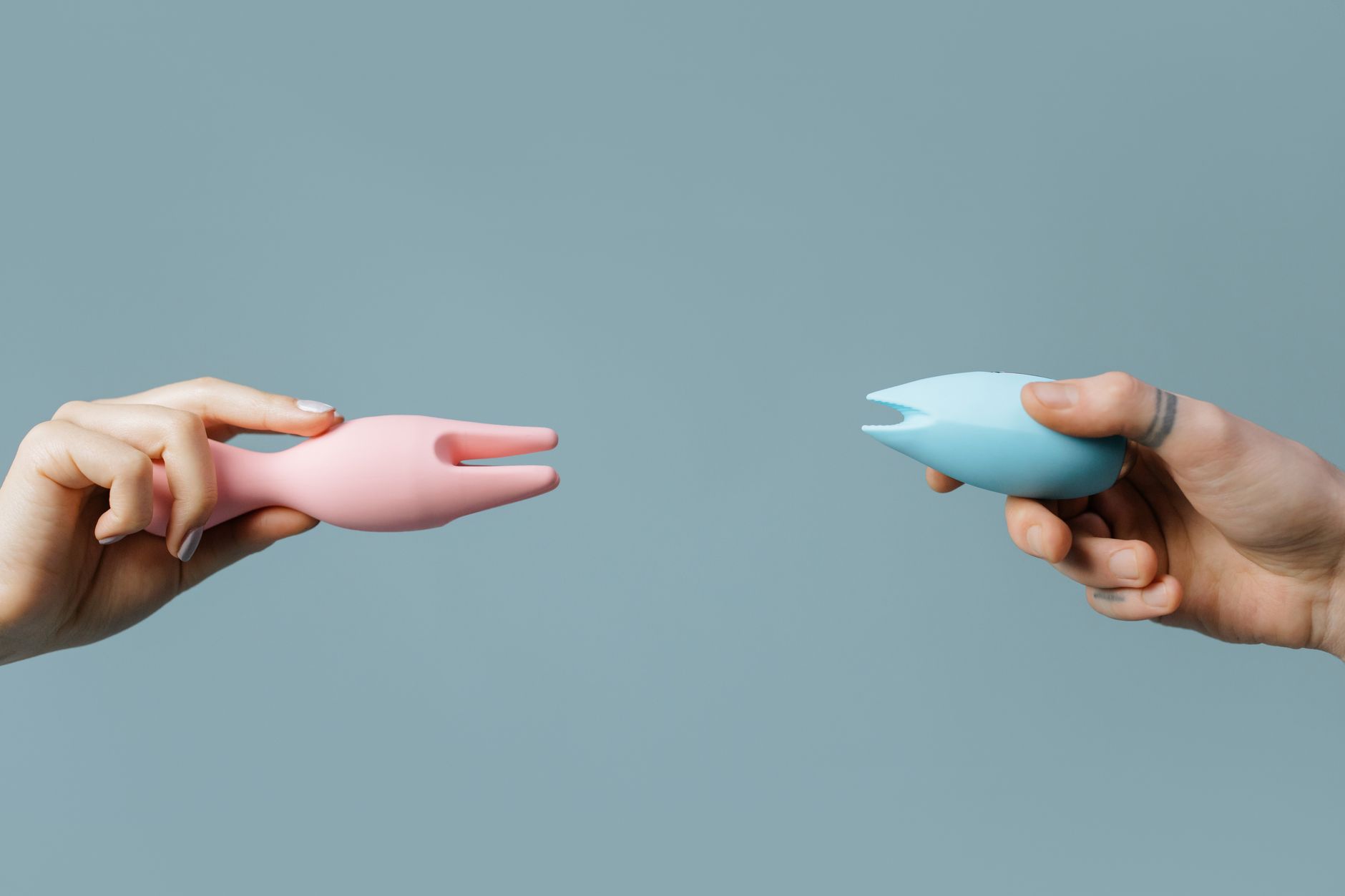
Photo by cottonbro studio on Pexels
Week 2 to 3: Solo exploration. If your partner is open to it, suggest they use a lemon vibrator alone first. No pressure to do it. Just an invitation. Many people find that solo exploration removes the performance pressure entirely. You learn what you like. Your partner learns what they like. Then you bring that knowledge into the shared experience.
Let them know you're curious about what they discover, but you're not asking for play-by-play details unless they want to share. Some people love talking about it. Others find that kills the magic.
Week 3 to 4: Touching the toy together, not using it yet. This sounds silly, but it's wildly effective. One of you holds the lemon clitoral vibrator. You both touch it. You talk about the texture, the weight, the sound when it turns on. Let your partner hold it while it's off. Then on the lowest setting. Just getting familiar.
This is where a lot of the nervousness dissolves. It's not scary anymore. It's just an object. It's just something you're curious about together.
Week 4 onward: Integration into your intimacy. Only when you both feel ready, you introduce it into sex. You might start with one partner using it on themselves while the other watches. Or you might use it on each other. There's no right way. The point is that you've already done all the vulnerable conversations.
What to actually say during the first time
Before you start: "I'm excited about this, and I'm a little nervous too. Are you nervous?" Naming the feeling reduces it by half.
While it's happening: "Tell me what you're feeling" or "Let me know if you want to try a different setting." Keep checking in. Not in a clinical way. Just conversationally.
After: "I liked that" or "That was interesting" or "I want to do that again." You don't need flowery language. Honest is enough.
One thing I tell couples: the first time using a toy together is rarely the best time. You're both a little self-conscious. You're paying attention to the mechanics instead of the sensation. This gets better. By the third or fourth time, you'll actually relax.
Common fears, named and addressed
"Will my partner think I'm not enough?" They might worry that for about five seconds. Then they realize that pleasure is not a zero-sum game. More pleasure for you is not less pleasure for them. It's often the opposite. Seeing your partner experience something intense is deeply satisfying to most people.
"What if they don't want to use it on me?" That's worth asking about directly. Some people love the idea of using a lemon vibrator on a partner but don't want one used on them. That's fine. You can take turns. Or they can use it during masturbation while you're together. There are options beyond the one you imagined.
"What if I feel self-conscious about my body?" This is real and valid. One workaround: dim lighting, or blindfolds, or focusing on sensation rather than sight. You can also talk about this with your partner. "I'm a little self-conscious right now. Could we dim the lights?" Most partners will say yes and thank you for the honesty.
How lemon vibrators specifically help couples reconnect
If you've been intimate for a long time, sensation can start to feel routine. A lemon clitoral vibrator introduces novelty without introducing another person. You're exploring familiar territory with a new tool. That's a very different energy from "we need to spice things up" or "something's missing."
The suction mechanism of a lemon vibrator also means less direct friction, which many people find more comfortable during partnered sex. Your partner can use it while inside you, or you can use it on yourself while they're present. Different options for different days and moods.
The conversation after
This matters as much as the experience itself. Not immediately after. Maybe the next day. "I'm glad we tried that. How did it feel for you?" Listen without defending or explaining. If they didn't love it, that's data, not failure. If they did, great. Now you know something true about what you both like.
Use this feedback loop to keep building. Maybe next time you try a different setting, or a different position, or a different moment in your intimate time together.
A note on mismatched enthusiasm
Sometimes one partner is excited about lemon vibrators and the other is neutral or hesitant. That's normal. It doesn't mean you can't still explore it together. It just means you move at the pace of the more cautious partner.
The goal isn't to convince someone to be enthusiastic. The goal is to build intimacy through honesty and curiosity. If your partner is willing to explore something you care about, that's already an act of intimacy. Respect that.
When to talk to a professional
If the conversation about toys triggers bigger relationship issues. If you discover you have very different ideas about sex, or desire, or what intimacy should look like. That's not a sign that toys are bad for your relationship. It's a sign that you might benefit from a couples therapist who can help you navigate those differences.
I work with couples all the time who introduce toys and realize they need to rebuild other parts of their connection. That's actually really valuable. The toy becomes a doorway to deeper work, not a shortcut around it.
Building real intimacy takes time
There's no timeline for this. Some couples move through all these steps in a month. Others take three months. The speed doesn't matter. What matters is that you're moving together, that you're communicating, and that you're treating each other's comfort and curiosity with equal weight.
Intimacy isn't built in individual moments. It's built in the space between moments. It's built when your partner says something vulnerable and you listen without judgment. It's built when you suggest trying something new and they say yes because they trust you. It's built when you use a lemon clitoral vibrator together and you both feel a little braver afterward.
That's the real work. The tool is just a tool. The connection is everything.
People also ask
How do I bring up lemon vibrators if we've never talked about toys before?
Start in a moment of relative ease. Not during or right after sex. Not during an argument. Try something like: "I've been reading about couples and pleasure, and I'm curious what you think about trying a lemon vibrator together." Keep it light. If they seem interested, great. If they seem closed off, ask what's making them hesitant. That's the real conversation.
Can lemon clitoral vibrators help if we have mismatched desire?
Sometimes yes, sometimes no. A vibrator can make solo pleasure easier, which can actually reduce resentment in mismatched couples. It gives the higher-desire partner an outlet that doesn't require their partner to perform. But it won't fix underlying issues about feeling unwanted or disconnected. For that, you might need to explore deeper relationship work. That said, using a lemon vibrator together can be a gentle way to rebuild physical intimacy if desire has waned.
What if my partner is embarrassed about using a lemon vibrator?
That's completely normal, and it's worth honoring. Embarrassment is a protective emotion. It usually means they care about what you think of them. Reassure them that you want to explore this because you're attracted to them, not because you're unsatisfied. You might also suggest starting solo. They can experiment with a lemon vibrator on their own first, and you can bring it into partnered sex only when they feel ready. There's no rush.
Can we use lemon vibrators if one of us has had sexual trauma?
Yes, but with care and communication. Someone with a trauma history might need more control, more communication, or more breaks. They might need to use the vibrator on themselves first before bringing a partner into it. They might need to establish a signal if they want to stop. All of this is fine. The key is that your partner knows they can pause whenever they need to. If penetration or specific sensations are triggering, a lemon clitoral vibrator can actually be a safer way to experience pleasure because it's less invasive than some alternatives.
How do I know if we're moving at the right pace?
You're moving at the right pace if both of you feel curious rather than pressured. If one of you is feeling anxious or resentful, you're probably moving too fast. Slow down. Go back to conversations. The physical stuff can wait. You're building a foundation here, not racing to a finish line.
What if we try using lemon vibrators together and it doesn't go well?
That's fine. Most couples have a moment where they try something and it's awkward or uncomfortable. It doesn't mean you should never try again. It usually just means you need a different approach. Maybe you tried too fast. Maybe you were in the wrong mood. Maybe the vibrator itself wasn't the right fit. You can troubleshoot any of those things. The important part is that you talked about what didn't work and you're willing to try again.
Moving forward
Introducing a lemon clitoral vibrator into your relationship is really an invitation to slow down and get curious together. It's not about performance. It's not about fixing anything. It's about saying to your partner: "I want to know you better. I want to explore pleasure with you. I want us to feel connected." Everything else follows from that.
If you're navigating bigger relationship challenges around intimacy or desire, consider reaching out for personalized guidance on rebuilding connection. Sometimes we all need support moving through these transitions together.