Rediscovering yourself after partnership feels weirder than you'd expect
You just ended a long relationship. Or maybe it ended itself. Either way, you're standing in front of your closet or your nightstand, and suddenly everything feels foreign. The person you've been calibrating your pleasure around for years is gone. And now you have to figure out: what actually feels good to me?
That's the question that stops most people cold. Not because the answer is shameful. Because after years of syncing your body to someone else's rhythm, you might not remember what solo pleasure even looks like.
Why solo pleasure after a long relationship feels like learning something new
When you've been partnered for years, your arousal gets tangled up with someone else's. You're reading their cues, timing things around their interest level, maybe even suppressing what you actually want because it's easier to keep the peace. You're not having bad sex. You're just not having your sex anymore.
Then the relationship ends, and people expect you to just switch back on. "Treat yourself," they say. "You deserve this." But your nervous system doesn't know how to want something just for you. It's been wired for negotiation.
What makes this harder is that you probably weren't taught to prioritize solo pleasure in the first place. So after a breakup, you're not just grieving the relationship. You're trying to rebuild a connection to your own body from scratch. That takes permission, patience, and a tool that doesn't demand anything from you.
Why lemon clitoral vibrators work better for this transition
Lemon vibrators, especially designs like the air-suction style, are specific tools for specific moments. They're not about performance. They're not about impressing anyone or reaching a finish line.
Here's what makes them useful when you're rebuilding:
They focus on clitoral pleasure, not the whole system. After a long relationship, you don't need to manage sensation across your whole body for someone else. You can zoom in. Lemon vibrators give you permission to be selfish about exactly what feels good in this exact moment.
They create a clear boundary between solo time and relational time. When you use a lemon clitoral vibrator, you're not running a dress rehearsal for partnered sex. You're doing something just for you. Your brain learns to associate this tool with your own pleasure, not with someone else's expectations.
They're low-pressure technically. You don't need to figure out angles or communicate instructions or worry if you're "doing it right." You turn it on and explore. That simplicity matters when you're already feeling vulnerable.
Starting small: three ways to rebuild trust with your own body
Explore without a goal. Most people approach solo pleasure like they're trying to achieve an orgasm. That's performance pressure dressed up as self-care. Instead, set a timer for 10 minutes and use a lemon vibrator just to notice what your body responds to. Lower intensity settings. Different patterns. Different spots. No finish line.
Create a ritual that's different from your partnered life. Maybe that's a specific time of day, a particular room, a playlist. Something that signals to your brain: this is my time, my pleasure, my body. That ritual becomes an anchor. It helps you stay present instead of slipping into relational patterns.
Start clothed or partially clothed if full nudity feels too vulnerable. There's no rule that says you need to remove your clothes to use a lemon clitoral vibrator. Lots of people start through underwear or clothing. The barrier actually helps some people focus on sensation instead of getting caught in body image spirals.
The emotional part (which is the real part)
Here's what nobody tells you about solo pleasure after a breakup: it's not actually about the orgasm. It's about permission.
For years, maybe decades, your pleasure was something you negotiated. Whether you were in a dead bedroom, a high-pressure relationship, or a genuinely good one that just wasn't about you, your body learned to be polite. To take up less space. To prioritize harmony over desire.
Using a lemon vibrator after a long relationship is the physical act of saying: my pleasure matters enough to spend time on it. Not as a rebound. Not as proof that you're okay. Just as fact.
Some people cry the first time. Some people feel guilty. Some feel angry that they haven't done this in years. All of that is normal.
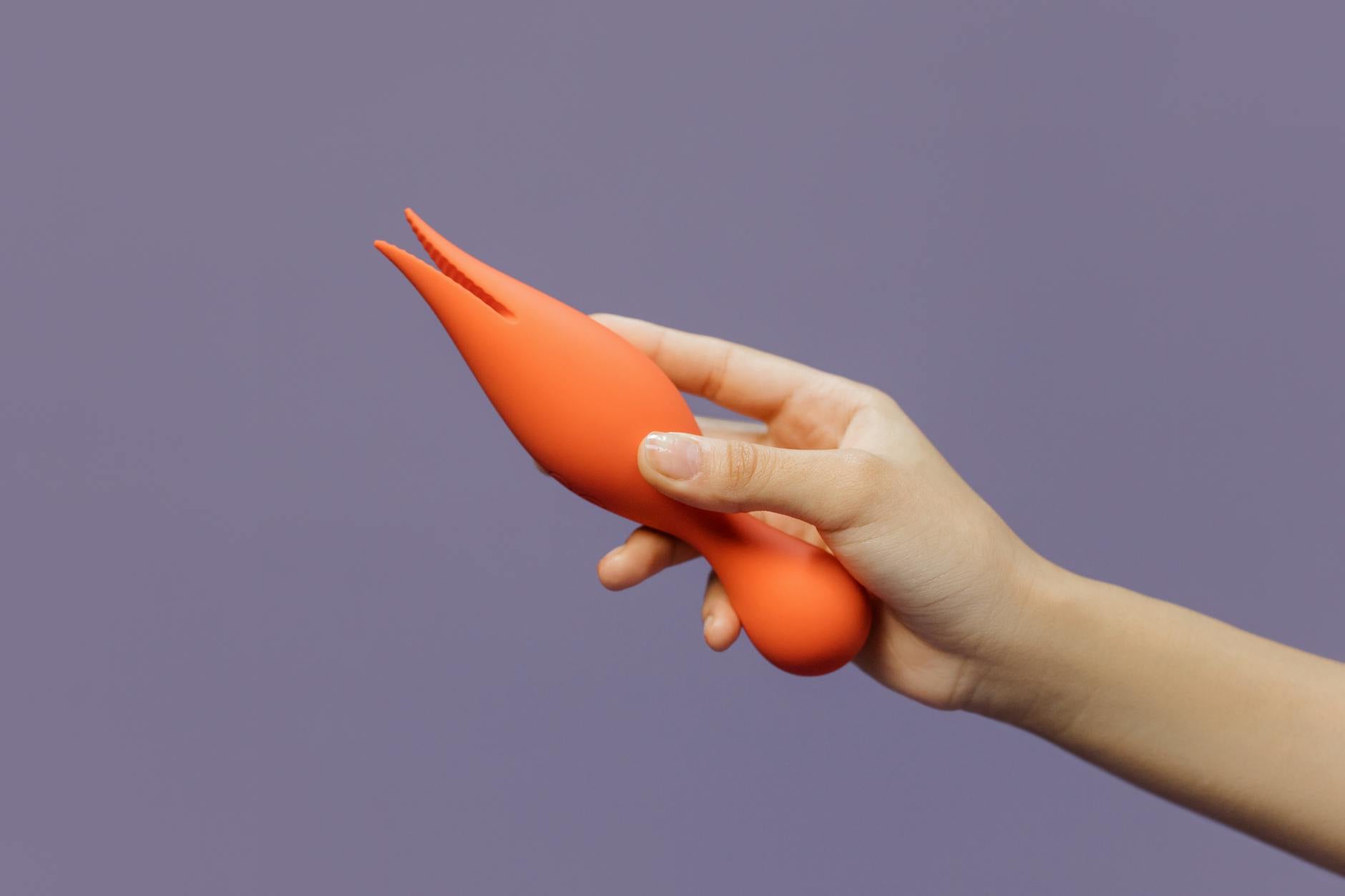
Photo by cottonbro studio on Pexels
How to use lemon vibrators without guilt or weirdness
Start by treating it like any other self-care. You wouldn't feel weird about taking a bath alone or going for a run alone. Solo pleasure is the same category. It's maintenance. It's knowing your own body. It's basic.
When you first use a lemon clitoral vibrator after years away from solo pleasure, try this sequence:
First session: lowest intensity, no expectation. Just get familiar with how it feels. You're collecting data, not chasing sensation.
Second and third sessions: try different patterns or intensities. Notice what makes your breath catch. What makes you want to stay vs. what makes you want to stop. Your body will tell you.
By session four: you'll probably have a favorite setting. That's when it gets easier. Familiarity builds confidence. Confidence builds pleasure.
The whole process takes maybe two weeks of regular use. After that, it's not weird anymore. It's just part of what you do.
What if you feel guilty
That feeling usually comes from one of three places:
You learned that your pleasure wasn't valuable. Especially if you were the person in the relationship who adjusted more, wanted less loudly, or got trained to feel like a burden. Using a lemon vibrator directly contradicts that old message. Of course it feels wrong at first.
You're grieving the relationship even though you're glad it's over. Your body can want to move forward while your heart is still processing. That's not a reason to stop. It's exactly why gentle, low-pressure tools like lemon clitoral vibrators help. They don't demand anything. They just meet you where you are.
You're worried about becoming dependent on a device instead of learning to enjoy sensation naturally. Here's the thing: how to use lemon vibrators when numbness affects sensation during sex shows that vibrators actually teach your nervous system how to respond. They're not a crutch. They're a gateway back to your own desire.
The difference between solo pleasure and partnered pleasure
This matters, because some people worry that if they get used to a lemon vibrator, they won't enjoy partnered sex anymore. That's the opposite of how it works.
When you know your own body, you're a better partner. You know what you like. You can ask for it. You don't resent your partner for not reading your mind because you've proven you can read your own mind first.
Also, how to use lemon vibrators for better foreplay with a long-term partner shows that clitoral vibrators actually enhance partnered time. They're not a replacement. They're a tool that makes both solo and partnered pleasure easier to access.
Right now, though, after a long relationship, the goal isn't to prep for your next partner. It's to prove to yourself that your pleasure matters as a standalone thing. That's revolutionary if you've been someone who learned to shrink.
When to expect shifts
Give yourself at least four weeks of regular solo exploration before you try to evaluate whether it's "working." Your nervous system needs time to adjust to the idea that you're allowed to want something just for yourself.
Around week three or four, something usually shifts. You'll be less self-conscious. You'll stop looking at the clock. You'll actually feel something instead of just going through motions. That's the moment you know it's real.
By week six, many people report that solo pleasure feels genuinely pleasurable instead of obligatory. They're not doing it because they think they should. They're doing it because their body actually wants it. That's the difference.
Common questions about solo pleasure after long relationships
How long should a solo session actually be?
There's no standard. Some people spend five minutes with a lemon vibrator and that's enough. Others spend 20 and want more. What matters is what feels right to your body, not what you think it should be. Quality beats duration every time.
Is it normal to feel sad or emotional during or after solo pleasure?
Completely normal. You're reconnecting with a part of yourself you've been neglecting. Sometimes that triggers grief about the relationship, sadness about lost time, or joy at reclaiming your body. All of those are valid. Feel them and move on.
Can you use lemon vibrators if you're already dating someone new?
Absolutely. Solo pleasure and partnered pleasure are different conversations. You can use a lemon clitoral vibrator for yourself even if you're intimate with someone else. One doesn't cancel out the other.
What if you don't orgasm the first few times?
That's not failure. Orgasm isn't the goal right now. Reconnection is. If you're feeling sensation, noticing what your body likes, and spending time without shame, you're already succeeding. Orgasm will probably come later, once your nervous system trusts that this is safe.
How do you talk to a future partner about your use of lemon vibrators?
The same way you'd mention anything else that's true about your body. Simple. No apology. "I use a clitoral vibrator sometimes for solo pleasure" is a complete sentence. If someone has a problem with you knowing your own body, that's information about them, not about you.
Should you hide your lemon vibrator or keep it visible?
Whatever feels right. If you're living alone, this is genuinely your decision to make. If you're sharing space, you get to decide whether you want it visible or stored. You're not doing anything wrong. You don't need to hide.
The real work: rebuilding your relationship to your own desire
Using a lemon vibrator after a long relationship isn't really about the tool. It's about what the tool represents. Permission. Continuity. The idea that your pleasure is worth investing in, whether or not anyone else is in the room.
After years of being partnered, you probably forgot that you're interesting to yourself. That your body has opinions. That you deserve to feel good without negotiating first.
A lemon clitoral vibrator helps you remember that. Not by being fancy or complicated. Just by being there, ready to go, asking nothing except that you show up.
That's enough. You're enough. Your pleasure was always enough.